JOURNAL / MATERIALS AND CUSTOMIZATION
Sisal vs Cardboard Cat Scratchers: Which Lasts Longer for Retail Buyers?
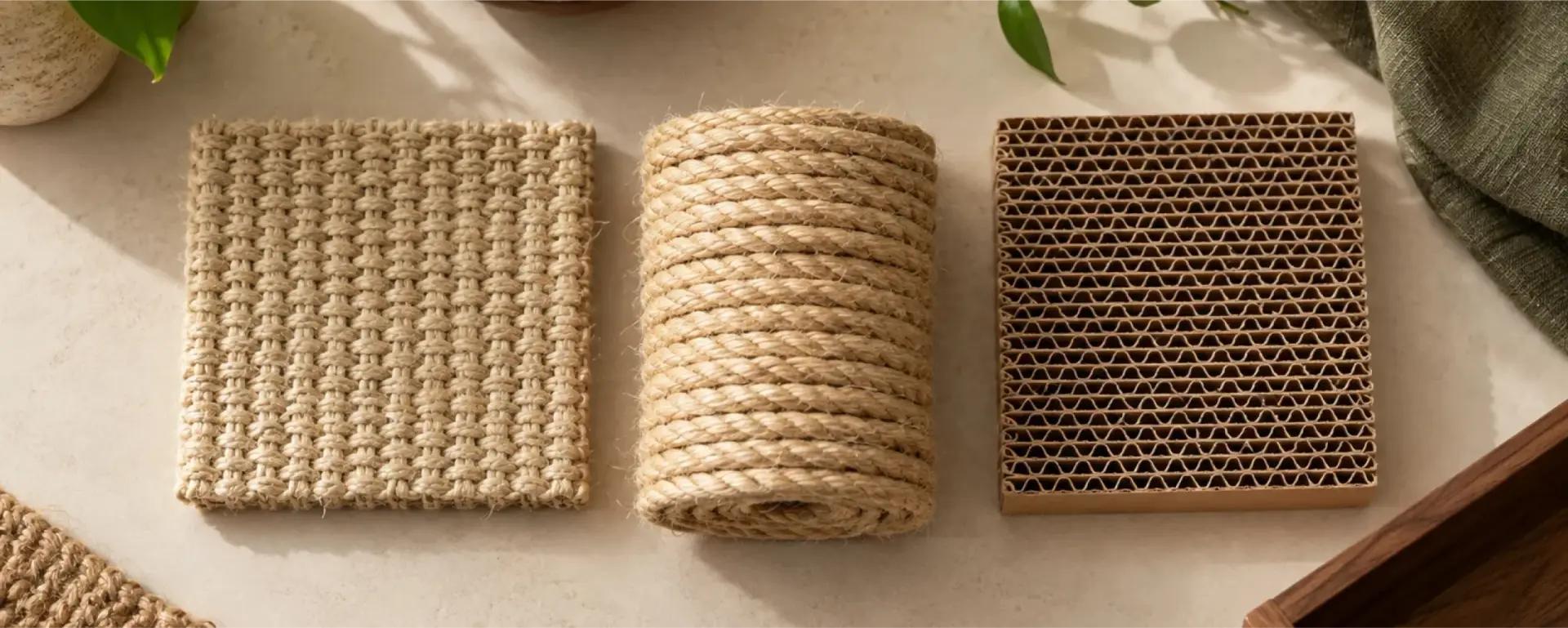
Choosing a scratching material affects texture, use, wear and replacement. Sisal offers pronounced fibre texture in rope-wrapped and woven constructions; cardboard suits other formats, including replaceable inserts and shaped floor scratchers.
Compare three things: how the surface feels to scratch, how the product is built and what happens when it wears.
For a material-led retail collection, sisal deserves evaluation alongside the product’s intended position and price. Cardboard and jute offer different development routes. The aim is a suitable range with clear choices, rather than declaring one fibre the winner in every construction.
Start with the instinct to scratch
Scratching supports normal feline claw maintenance, stretching and marking. Surface, orientation, stability and placement all matter.
An owner survey reported frequent use of sisal-rope surfaces, while kitten research found preferences for certain S-shaped cardboard scratchers. Offer considered choices rather than assume one material suits every cat. Match construction to upward, horizontal or angled scratching.
Sources: owner-observation study; kitten preference study.
Comparing sisal, cardboard and jute
Use this comparison to guide development and sample evaluation.
| Material | Surface and construction | Durability factors | Reference replacement estimate* | Potential retail role |
|---|---|---|---|---|
| Sisal | Pronounced texture; wrapped rope or woven surface | Fastening, weave, edges and attachment | 9–18 months | Posts, mats, furniture-integrated scratch zones |
| Corrugated cardboard | Layered, textured corrugated edges | Board structure, bonding, thickness and support | 1–2 months | Shaped floor scratchers, replaceable inserts |
| Jute | Natural-fibre rope or woven surface | Fibre specification, construction, fastening and wear | 4–6 months | Alternative natural-fibre designs |
Indicative planning ranges, not controlled comparative test results or guaranteed service lives. Actual needs depend on construction, scratching intensity, cat numbers, care and environment. Confirm model-specific expectations with the supplier; substantiate any comparative lifespan claim separately.
Why consider sisal for your range?
Tactile material identity. Develop its visible texture through rope diameter, weave, coverage and edge finishing.
Coordinated formats. Rope-wrapped posts and woven mats can share a material story while serving different scratching positions and home settings.
A connection with interiors. Sisal’s use in cordage, rugs and furnishings offers a starting point for home-oriented scratcher design. Combine that material identity with sound construction, clear care guidance and an appropriate price position.
Which material lasts longer?
Evaluate a well-constructed sisal product when sustained use is a priority, and cardboard where replaceable inserts suit the range. Neither material has a universal replacement schedule. Construction, scratching intensity, cat numbers, moisture and care affect wear.
For sisal, check rope retention, surface attachment and edges. For cardboard, inspect breakdown, bonding and insert support. Compare actual samples under agreed conditions before claiming “longer-lasting.” Record cosmetic wear, attachment failure and loss of function separately.
Think beyond the first purchase
A replaceable scratching surface may let customers retain a usable supporting structure. Confirm part compatibility, availability and fitting instructions before making that promise.
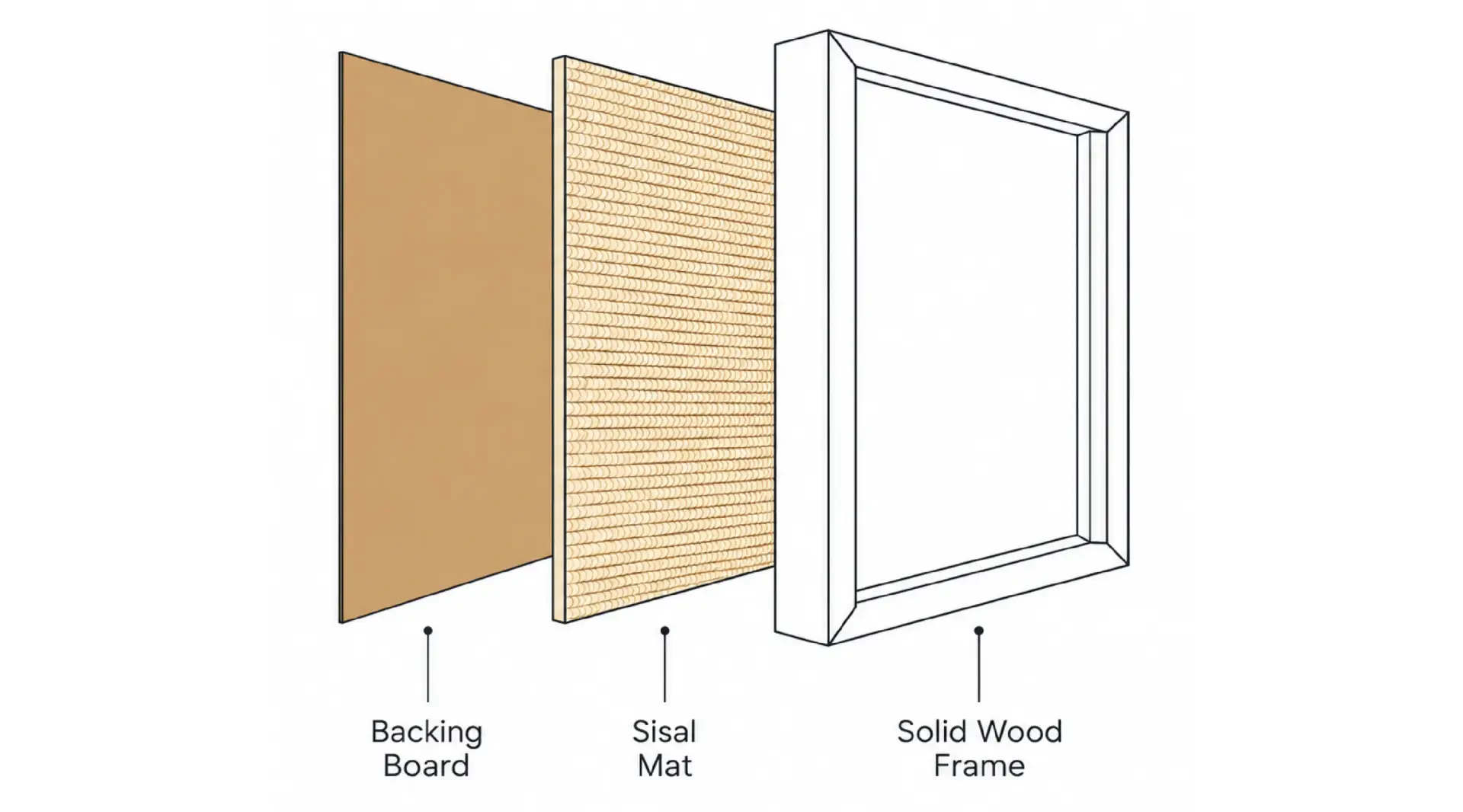
Specify what customers replace and what remains. A worn insert, woven panel and rope-covered post require different replacement arrangements; removing the product from its position does not by itself establish that its scratching component can be changed.
Sisal’s plant origin is one part of the material story. Backing, adhesives, other components, packaging and disposal also affect the finished product’s environmental performance. Waste or carbon claims need complete-product evidence.
Material composition to match your brief
TerraFaser primarily offers 70% sisal and 30% polypropylene scratching material, and can also provide 100% sisal according to customer requirements. Contact our sales team to discuss the right option for your project. These percentages refer to the specified scratching material, not the complete product. Confirm composition, weave, texture and construction through sampling.
Discuss intended use, appearance, backing, binding and target price with the sales team to select a suitable construction.
Develop your scratching range with TerraFaser
Instinct-led. Material-first. Market-ready. Start with cat behavior and the home setting, select surface and structure together, and review appearance, care, wear and replacement through samples.
Share your customers, price band, preferred format and material direction with TerraFaser to develop a suitable sampling plan.
Connected ideas for your range.
TAKE THE NEXT STEP
Bring the questions into your next brief.
Discuss your range → felix@terrafasercat.com