JOURNAL / PRODUCT DEVELOPMENT
Better Cat Scratching Posts: Six Product Development Priorities

We reviewed 1,000+ Amazon US customer reviews across 10 cat scratching products to identify useful product development questions. The analysis recorded 104 low-star comments about instability, 41 about edges or staples, and 16 about assembly-related problems.
Positive feedback valued sturdiness, easy assembly and stretching room. We recommend six priorities for development and sampling.
1 Start with the complete structure
Investigate sliding, joint movement and tipping separately. Review the base footprint, weight distribution, floor contact, post connection and any required anchoring as one assembly.
A heavier base may help, but weight alone cannot establish performance. Agree evaluation conditions and acceptance criteria for the specific design with qualified engineering or testing personnel. Include the intended scratching position and inspect the joints afterwards.
2 Specify usable dimensions
Record the exposed scratching height, post diameter, base footprint and approach space.
Match dimensions to the target cat and household. Larger cats, kittens and cats with different access needs may require different formats. Use dimensioned drawings and sample evaluation to support suitability claims.
3 Match materials to the specification
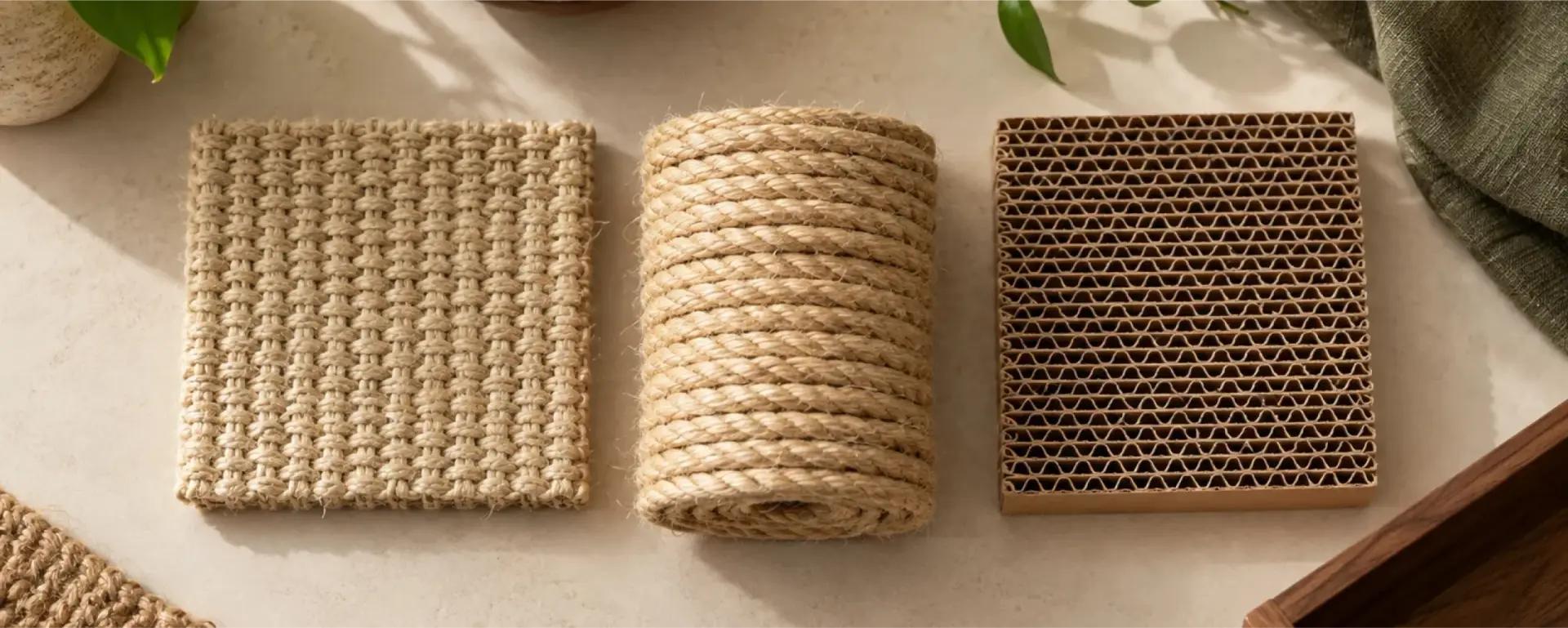
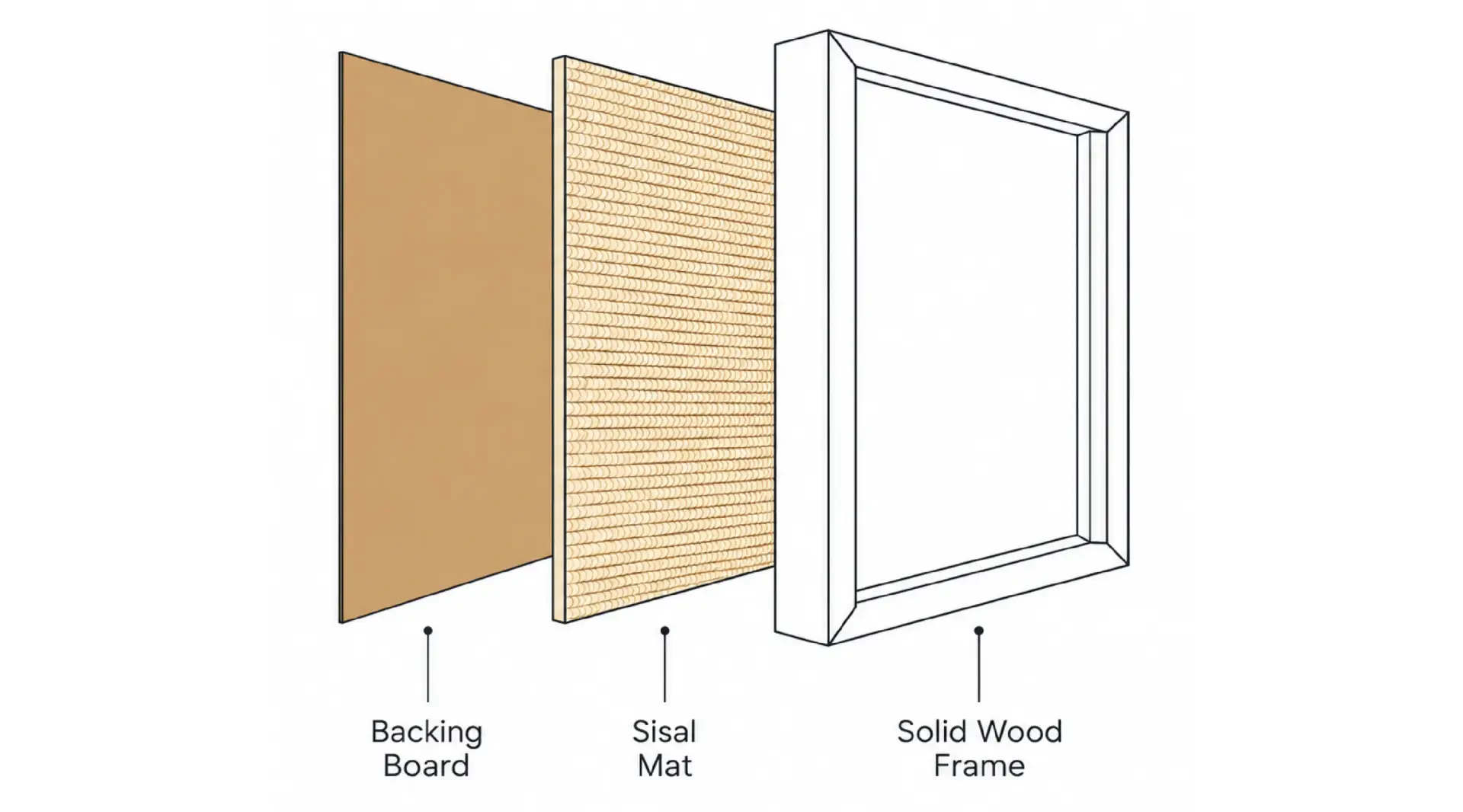
Identify the scratching surface separately from the core, backing, binding and structural components. Confirm composition, weave, texture, attachment and edge finishing on the complete sample.
Terrafaser offers 100% sisal and 70% sisal / 30% polypropylene scratching-material options, according to customer requirements. These percentages refer to the specified scratching material, not the complete product.
Agree how material changes will be approved. Keep production, product descriptions and the approved sample aligned; assess wear through appropriate evaluation rather than the material name alone.
4 Check exposed details and accessories
Review accessible corners, staples, fastenings, rope ends and toy attachments. Consider how these details may change as the scratching surface wears.
Assess the complete accessory arrangement and relevant test evidence before making safety or durability claims.
5 Approve the retail package
Assemble a packed sample using the intended customer instructions and listed tools. Check the part count, hardware labels, hole alignment and final setup.
Revise confusing instructions or incomplete kits before launch. The approval sample should match what customers receive.
6 Support replacement beyond the design
If replacement suits the brief, define which parts stay, which change and how customers identify compatible components. Confirm fitting steps and ongoing supply.
Compare replacement pricing and shipping with the original purchase. Lower ownership cost and reduced waste depend on parts that customers can obtain and fit, supported by a workable service model.
Turn feedback into a sample checklist
| Owner feedback | Development focus | What to confirm |
|---|---|---|
| Sliding or tipping | Base and post connection | Stability evaluation and setup |
| Limited reach | Usable surface dimensions | Target-cat brief and drawings |
| Material uncertainty | Component-level specification | Composition and matched sample |
| Exposed edges or loose toys | Finishing and attachments | Inspection and test records |
| Difficult assembly | Hardware and instructions | Packed-sample assembly review |
| Worn scratching surface | Replacement system | Compatibility, fitting and supply |
Bring a clearer brief to sampling
Terrafaser connects these decisions through Instinct-led. Material-first. Market-ready. Start with feline use and the home setting, select materials and construction, then agree what must be checked before launch.
As a B2B sourcing partner for mats and pet furniture, we help structure discussions between buyers and manufacturing partners. Share your channel, target households, price band and priorities so sampling answers the questions that matter.
Source: Amazon Cat Scratching Post VOC Analysis Report, 22 October 2026. Stratified review sample; theme counts are not market-wide rates. Development proposals require design-specific validation.
Connected ideas for your range.
TAKE THE NEXT STEP
Bring the questions into your next brief.
Discuss your range → felix@terrafasercat.com