JOURNAL / SHARED LIVING AND DESIGN
From Cat Scratchers to Home Design:
Product Opportunities in Shared Living Spaces
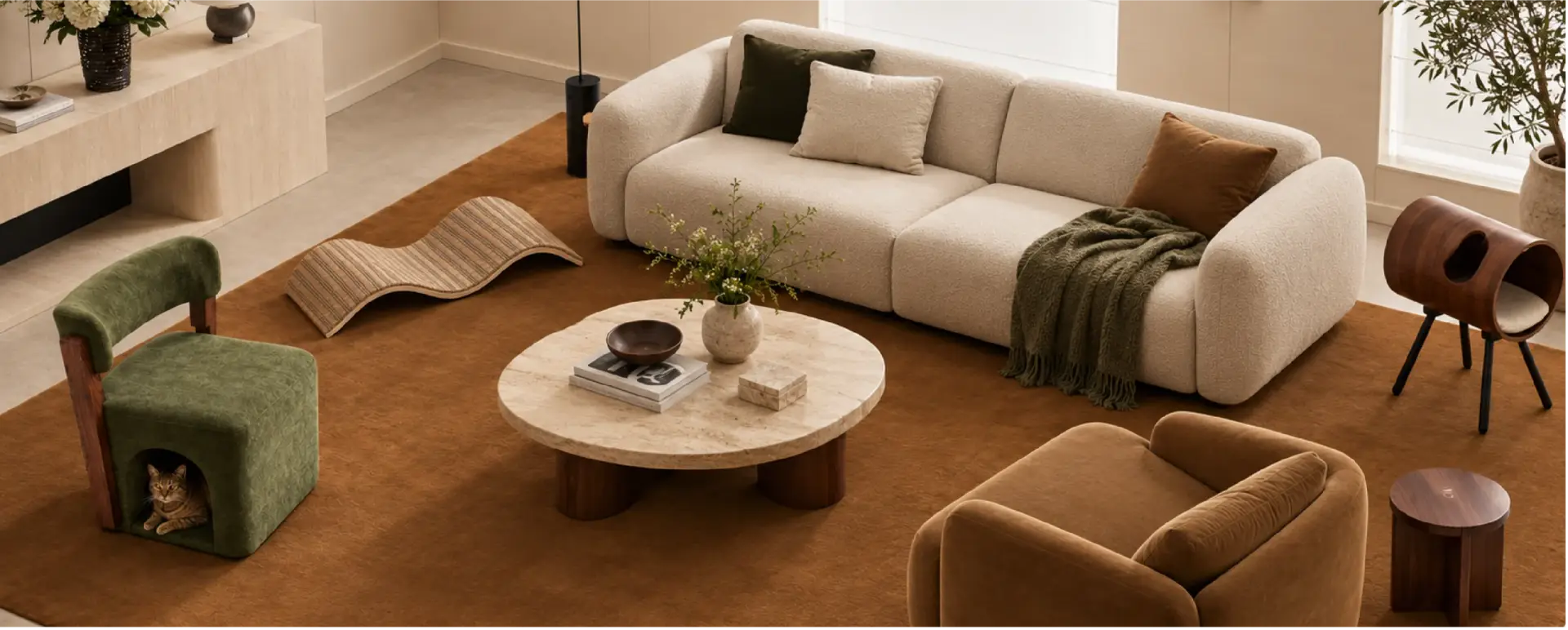
Look at how the product fits into the home
Where will a scratching mat sit? Will a post interrupt movement through the room? Can a wall scratcher coordinate with furniture and finishes?
For pet brands, home & lifestyle brands and retail buyers, these questions connect feline use, human routines and available space. TerraFaser calls this approach Interwoven Living: bringing people and pets together through considered behavior-led, material-first products.
Read the market through the household context
Grand View Research estimates the global pet accessories market at USD 7.2 billion in 2025, projecting 7.1% annual growth from 2026 to 2033. This covers multiple accessory categories, not cat scratchers alone.
APPA reported approximately 49 million U.S. cat-owning households in 2024, about 23% above 2023. Its 2026 Cat Report put the 2025 figure at approximately 53 million households.
These figures provide context, not a product forecast. Development still depends on where cats spend time, how people use the home and which needs existing products leave unresolved.
Sources: Grand View Research; APPA: The Year of the Cat; APPA: 2026 Cat Report.
Start with a specific place and purpose
Sofa sides, corners, windows and shared rooms raise different questions about dimensions, scratching orientation, fixings and appearance.
| Home location | Formats to consider | Development questions |
| Near sofas or furniture | Flat sisal mats; upright scratchers | Easy to approach? Furniture and walkways still usable? |
| Walls and corners | Framed mats; wall-mounted panels | Suitable installation, scratching area and height? |
| Window areas | Combined scratching and resting products | Compatible with light, curtains, activity space and stability? |
| Shared living areas | Freestanding posts; combined cat furniture | Appropriate footprint and straightforward maintenance? |
A location-led brief also helps product pages explain where an item belongs and what customers should check.
The same material can support different products when the setting changes. A narrow wall position may call for a different exposed area, frame profile or fixing arrangement from a floor mat beside a sofa. Define those constraints before selecting the final form, so the purpose remains clear throughout sampling.
Turn furniture protection into concrete design questions
Translate the familiar furniture-protection benefit into requirements: can the scratcher sit near the relevant area? Do its orientation, surface and texture suit the intended action? Does it remain stable? Can customers understand placement, installation and care?
An appropriate surface provides an alternative scratching outlet. Results depend on placement, individual preference and introduction. Explain the use case without promising identical furniture-protection outcomes in every home.
Bring materials, color and proportions together
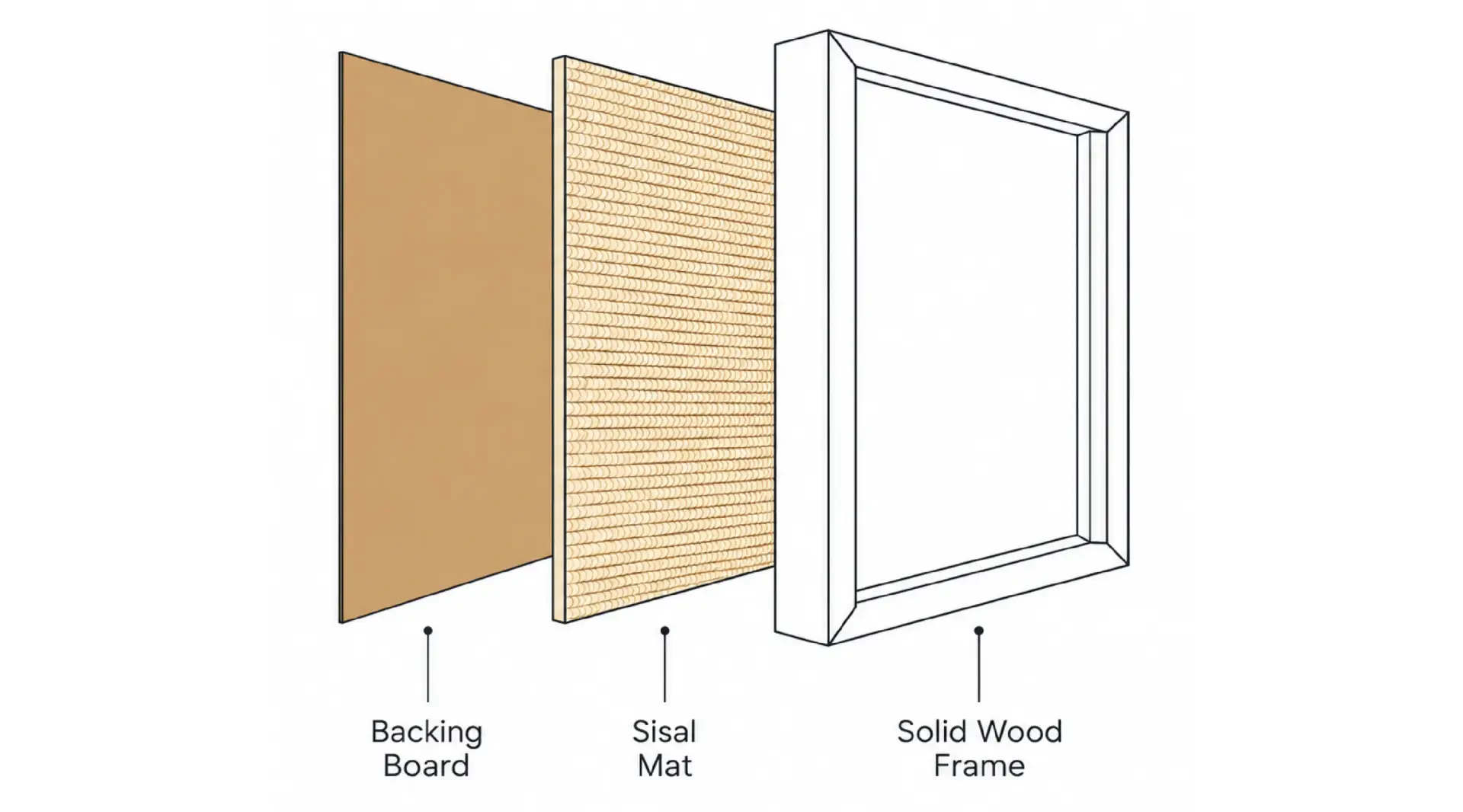
Material, outline, dimensions and structure shape how a scratcher fits the room. For framed mats, review frame width, exposed scratching area, profile and finish. Different frames can give the same surface a contemporary or decorative character.
For posts, develop the base-to-post relationship, material combination and footprint alongside function.
TerraFaser primarily offers 70% sisal and 30% polypropylene scratching material, and can also provide 100% sisal according to customer requirements. Contact our sales team to discuss the right option for your project. These percentages refer to the specified scratching material, not the complete product. Confirm composition, weave, texture and construction through sampling.
Review feel and target price with the sales team. A material name alone cannot establish complete-product performance.
Build a range with clear functional roles
Everyday scratching: Mats, boards and posts with a defined scratching purpose.
Space-specific products: Wall, corner and furniture-adjacent formats with tailored dimensions and installation.
Interior-coordinated products: Frame profiles, wood tones, fabrics and proportions matched to the home style.
Combined functions: Scratching paired with rest, retreat or exploration where the brief calls for it. Validate each intended function and its structural requirements.
Clear roles help buyers organize the range and customers compare their options.
Avoid combining functions simply to add features. A resting area, retreat and scratching zone each create their own access, cleaning and structural questions. Where functions are combined, make their relationship easy to understand and check that one does not prevent the other from being used as intended.
Turn market observation into a workable brief
Define requirements that can be discussed, sampled and reviewed:
- Customers and channels: Who will buy and where it will sell.
- Location: Placement and space constraints.
- Function: The core need and supporting functions.
- Materials and appearance: Surface, structure, colors and style.
- Use and maintenance: Installation, cleaning and replacement needs.
- Commercial requirements: Price, quantities, packaging and delivery.
TerraFaser connects these decisions through Instinct-led. Material-first. Market-ready. Begin with feline behavior and shared-home use; evaluate materials through structure, touch and appearance; then connect design with manufacturing, packaging and customer instructions.
Planning a new scratching range? Share your target market, home setting and initial ideas with TerraFaser to explore suitable materials, formats and manufacturing options.
Connected ideas for your range.

TAKE THE NEXT STEP
Bring the questions into your next brief.
Discuss your range → felix@terrafasercat.com